
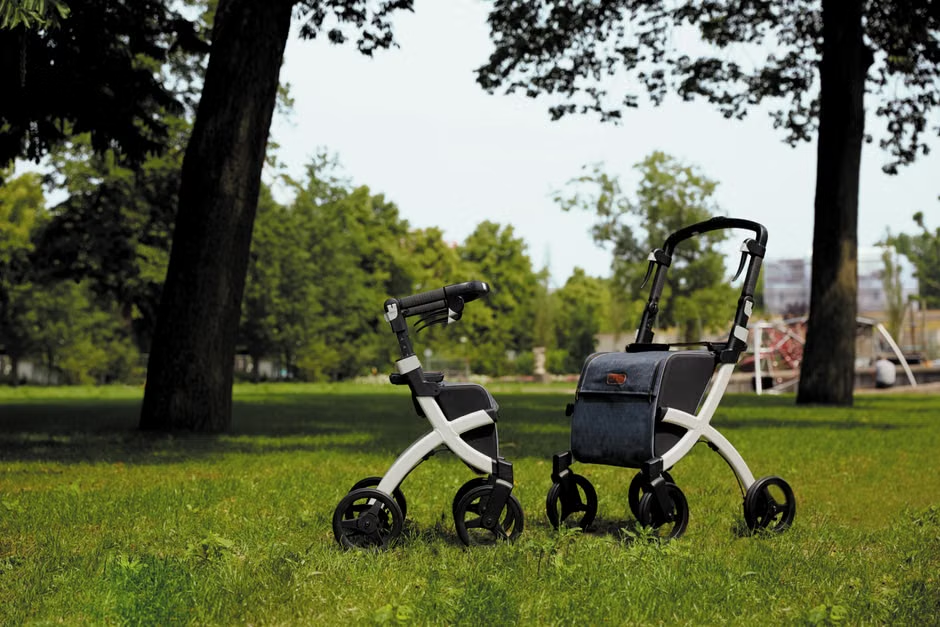
When deciding between a rollator vs walker, understanding your specific mobility and stability needs is essential. While both options offer support for daily movement, choosing the right rollator vs walker setup depends on where you walk, your physical strength, and how much fatigue you experience during the day.
What Is a Rollator?
A rollator is a mobility aid with three or four wheels, hand brakes, and often a built-in seat. Unlike a standard walker, which has wheels only on the front legs, a rollator has wheels on every leg. This design makes the rollator sturdier, with stronger wheels and larger casters. Most rollators include hand brakes and a seat, allowing the user to stop and rest when needed. The seat is intended to be used only while the rollator is stopped and the brake is engaged. A rollator should never be used as a wheelchair.
What Is a Walker?
A standard walker is a handled frame with four legs. The front two legs may have small wheels, but the back legs are typically ungliding. This means the user must lift the walker slightly with each step. Walkers are designed for people who need to lean on the device for support. They offer more stability for weight-bearing than a rollator does. Rollators, by contrast, are not meant to bear someone’s full weight. If you need to lean heavily on your walking aid, a standard walker is often the better choice.
Main Differences Between a Walker and a Rollator
The core distinction in the rollator vs walker choice comes down to wheel configuration and intended use. A walker is simply a handled frame with legs. A rollator has three or four wheels, making it easier to push forward without lifting. Rollators also tend to be sturdier and include features like hand brakes and a seat. Walkers are better for people who need to lean on the device for substantial support. Rollators are better suited for people who want speed and independence but do not require full weight-bearing support.
| Feature | Walker | Rollator |
|---|---|---|
| Wheels | Wheels only on front legs | Wheels on all legs (3 or 4) |
| Weight support | Designed for leaning and full weight support | Not meant for full weight bearing |
| Brakes | Usually none or optional | Hand brakes are common |
| Seat | Rarely included | Often included for resting when stopped |
| Maneuverability | Must be lifted with each step | Pushed forward; better for longer walks |
Three-Wheel vs Four-Wheel Rollators
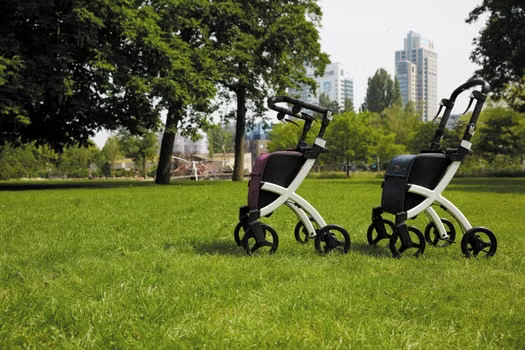
Rollators come in both three-wheel and four-wheel configurations, and each has advantages. A three-wheel rollator is frequently easier to maneuver and lighter in weight, making it a good fit for tight spaces like narrow hallways or crowded stores. A four-wheel rollator is typically more stable and almost always includes a seat. If you plan to rest frequently during outings, a four-wheel model with a seat is usually the better option. If you need to navigate tight corners and prefer a lighter device, a three-wheel rollator may suit you better.
Three-Wheel Rollators
These rollators often have a smaller turning radius, which helps in cramped indoor areas. They tend to be lighter than four-wheel models, making them easier to lift into a car trunk. However, they may feel less stable at higher speeds or on uneven ground. Most three-wheel rollators do not include a seat, though some have a small utility bag instead.
Four-Wheel Rollators
Four-wheel rollators are the most common type. They offer greater stability and usually come with a padded seat and backrest. This allows the user to stop, engage the brakes, and sit down to rest. Many four-wheel models also have a storage pouch or basket underneath the seat. Because they are heavier and larger, they can be more difficult to fold or load into a vehicle.
Rollator Weight and Materials
Rollators are made from a variety of materials, and weight is an important consideration. Steel frames are durable and affordable but heavier. Aluminum, carbon fiber, and EPP (expanded polypropylene) are lighter options. Lighter rollators are easier to lift and push, which can reduce fatigue during long walks. Heavier rollators may feel more stable but can be tiring to maneuver into a car or trunk. The best choice depends on your physical strength, typical terrain, and how often you need to transport the device.
Rollator Features to Consider
Beyond wheels and weight, several features can make a rollator more useful for your daily life:
- Hand Brakes: Allow you to control speed on declines and lock the wheels securely when stopping to sit.
- Height-Adjustable Handles: Ensure the grip aligns naturally with your wrist crease to prevent back and shoulder fatigue.
- Seat Size and Padding: Affect comfort during rest breaks on longer outings.
- Storage Options: Baskets or under-seat pouches help you safely carry personal items and shopping.
- All-Terrain Wheels: Larger 8-inch rubber wheels provide much smoother maneuverability across gravel, grass, and outdoor sidewalks.

Who Should Use a Rollator?
When evaluating a rollator vs walker, a rollator is intended for people who have difficulty walking long distances or maintaining balance, but do not need to lean heavily on the device for weight support. It is an ideal option for those who can stand and walk independently with light assistance and want to cover longer distances without exhausting themselves. People recovering from surgery or managing endurance conditions benefit greatly from having an onboard seat for resting.
Rollator vs Wheelchair
A rollator is not a wheelchair. The seat on a rollator is designed strictly for resting while the device is fully stopped and the brakes are locked. It is not intended for someone to sit in while being pushed. Using a rollator as a transport chair is unsafe and can lead to tipping or serious injury. If you or a loved one cannot walk or need to remain seated while moving, a dedicated wheelchair or transport chair is required.

Are Rollators Covered by Insurance or Medicare?
Some rollator models may be covered by Medicare and private health insurance plans, but coverage is not automatic. Standard Medicare coverage typically requires a doctor’s prescription and specific HCPCS billing codes demonstrating medical necessity for durable medical equipment (DME). Because coverage rules vary widely by plan and specific device, it is always best to check directly with your insurance provider or a credentialed medical supply provider to confirm eligibility before ordering.
Where to Try and Buy a Rollator in Dallas-Fort Worth
While buying online is an option, photos cannot tell you how comfortable the seat feels, how smoothly the hand brakes engage, or how heavy the frame feels when lifting it into your vehicle.
If you are located in the Dallas-Fort Worth area, visiting a local medical supply showroom allows you to test-drive different models, verify weight capacities, and receive personalized fitting from equipment specialists. Stop by Wheelchair & Healthcare Supply Co. in Arlington, TX to test out three-wheel, four-wheel, and heavy-duty rollators in person to ensure you get the perfect fit for your lifestyle.
Frequently Asked Questions
Can I sit on a rollator seat while moving?
No. The seat on a rollator is intended for use only while the rollator is completely stopped and the hand brakes are locked. Sitting on the seat while moving can cause the rollator to tip forward or sideways.
What is the weight limit for a rollator?
Standard rollators typically support between 250 and 300 lbs. Heavy-duty or bariatric rollators feature reinforced frames built to support 400 to 500+ lbs. Always check the manufacturer’s specific weight capacity rating before purchasing.
Can I use a rollator if I have balance problems?
Rollators help stabilize mild balance issues, but they are not designed to support your full body weight. If you experience severe balance loss or need to lean heavily on your aid, a standard walker or physical therapy evaluation is recommended.
How do I fold a rollator for storage or transport?
Most four-wheel rollators fold by lifting the strap located in the center of the seat, collapsing the frame side-to-side or front-to-back so it can easily slide into a trunk or back seat.